
The termite your five-year warranty does not cover
Treatment carried out, paperwork in the file, five years of cover. What the paperwork protects is the termite that comes up from the soil. Japan has another one that arrives by air, and it is usually written out of the warranty.
In short
- Japanese termite treatment is built around species that enter from the soil. The drywood termite flies in through openings above ground, and the treatment line never touches it.
- Warranties routinely exclude it. Some name it; others simply list the two species covered and exclude everything else, which reads as nothing at all if you do not know what is missing.
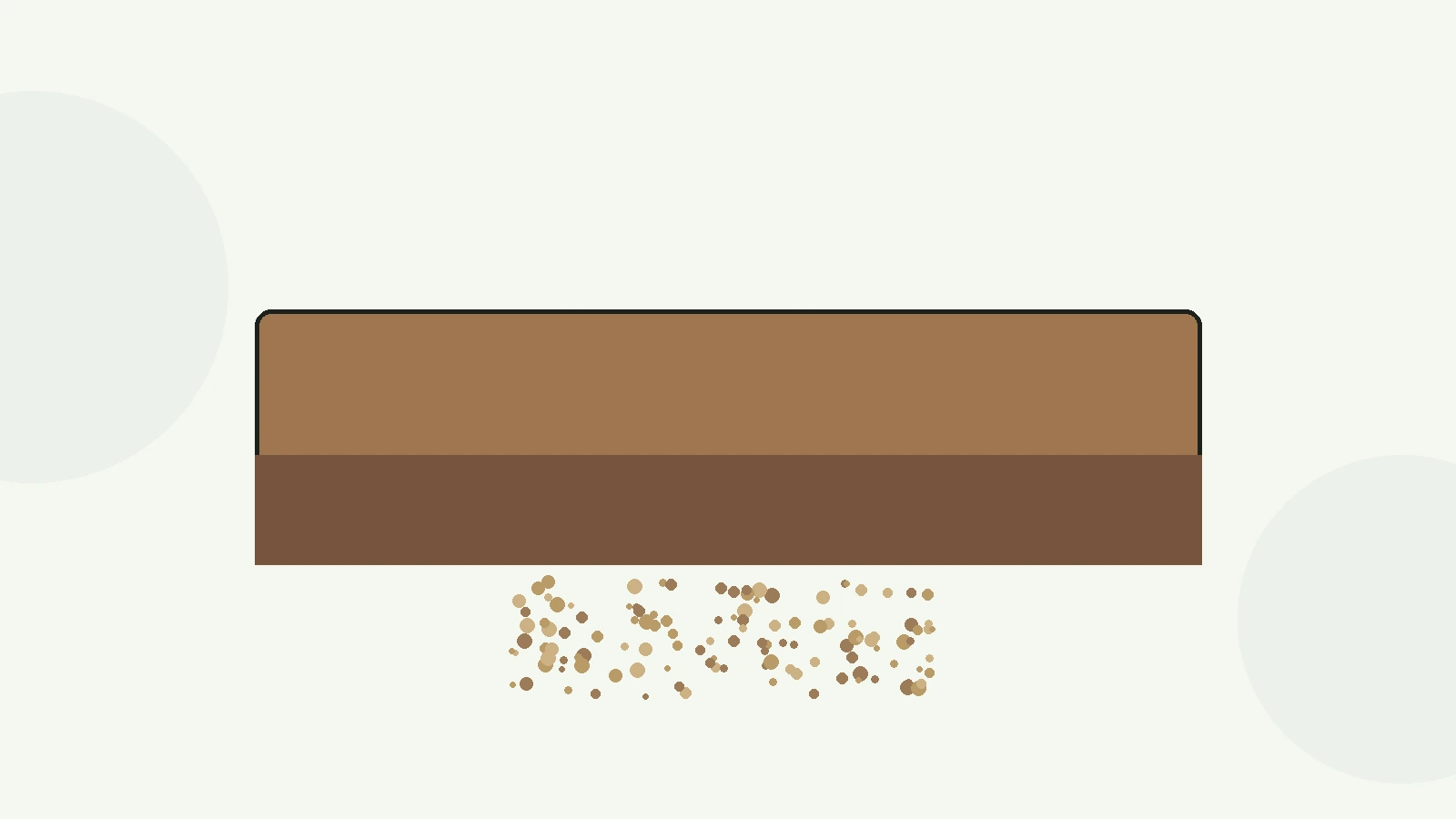
- The only visible sign is dry sand-like droppings beneath the damage. In an occupied house somebody notices. In an empty one nobody sweeps.
Three species, and one that breaks the rules
Japan has over twenty termite species. Three do serious damage to houses, and the third behaves unlike the other two in every respect that matters.
| The two established species | Drywood termite | |
|---|---|---|
| Origin | Long established in Japan | Introduced from North America |
| Timber preferred | Damp | Dry |
| Water | Required | Not required |
| How it enters | From the soil | Flies in through openings |
| Nest | Underground, or below the floor | Many small nests inside the timber itself |
| Where damage occurs | Subfloor and sills, and upward from there | Roof space, upper floors, joinery, furniture |
| Speed | Relatively fast | Slow. Years before signs appear |
Every assumption in the left-hand column is reversed in the right-hand one. That is the whole problem.
Why the standard treatment does not reach it
Japanese termite control works in two ways. Chemical treatment of the soil and timber beneath the house creates a barrier against insects coming up from the ground. Bait systems placed around the perimeter draw termites in and eliminate the colony through them.
Both are defensive lines drawn between the earth and the building. Both assume the termites come from below.
The drywood termite goes over the top. Winged adults fly and enter through eaves, vents, roof details and gaps around window frames. Nothing about that route passes near the treated soil. And because the insect survives on the small amount of moisture held in dry timber, it is at home on an upper floor or in a roof space where the native species could not live.
Its breeding habits finish the job. Rather than one large colony, it establishes many small ones dispersed through the timber. Eliminating one does nothing about the others in a different post, a different door frame, a different piece of furniture. There is no single nest to destroy, so the usual strategy has nothing to aim at.
The only sign is sand on the floor
This species eats the inside of timber and leaves the surface almost intact. Tapping produces a hollow note, but the wood can look entirely normal.
What gives it away is the droppings. Because the diet is dry timber, the droppings are dry too: hard grains resembling coarse sand, pushed out of small holes and landing directly beneath the damage.
- The same grains reappearing somewhere you have already cleaned
- On the sill of a traditional room, on tatami, inside a cupboard, under a window frame, beneath furniture
- Coloured close to the timber, from yellowish brown to near black
In a house where somebody lives, this gets noticed. It is odd enough to prompt a question.
In an empty house, nobody sweeps. The grains accumulate, and then somebody tidies once a year and clears them away without knowing what they were. Years later, at the point of selling or renovating, the structural timber turns out to be hollow. That is the typical way this is discovered, and by then the damage is done.
What the warranty actually says
Here is the part that costs people money.
A five-year termite warranty is commonly handed over with a secondhand house or after treatment. Standard treatment is built around soil-borne species, so the warranty is written around them too. Since the method does not structurally address the drywood termite, damage by that species is normally excluded.
That is not an inference. It is written in the documents.
Two ways of writing the same exclusion
Across the warranties we have examined, the exclusion appears in two forms. They are logically identical and they work on the reader completely differently.
The first names the species. One warranty stated, in red at the foot of the page, that cover applied to the two established species and did not extend to the drywood termite. It is named. It is in red. Anyone who reads the page understands the position.
The second lists what is covered and excludes the rest. Another set it out among the exclusions as damage caused by termites other than the two named species.
The meaning is the same. The effect is not, because the words "drywood termite" never appear anywhere on the document. A reader who does not already know that a third species exists passes straight over the line. They learn what it meant later, when an inspector stands in the room and identifies the insect.
Disputes come almost entirely from the second form.
A warranty is not something you have or do not have. It is a line naming which species are covered, and everything turns on that line.
For a buyer who cannot read Japanese, whether somebody translates that one sentence is the difference between an informed purchase and a very expensive surprise. Five things are worth establishing about any termite warranty:
- Which species are covered, named explicitly
- What the exclusions say
- How long is left to run, and from what date
- Whether it transfers to you as the new owner
- Whether it covers re-treatment only, or repair of the damage as well
The other ways a warranty stops working
Species is not the only exclusion. Conditions of this kind commonly appear, though the wording varies between companies:
- Water ingress from a roof leak or plumbing failure
- Flooding beneath the floor from an earthquake, flood or tsunami
- Alteration or extension where the new work was not treated
- Damage to the foundation concrete, or timber and waste left in contact with the ground
- Treated soil that has been substantially moved or washed away
- Damage to furniture and other movable property
- Repairs carried out before the treatment company has inspected
Now apply that list to a house standing empty overseas. A roof leak develops, nobody sees it, and the subfloor gets wet. At that point the warranty may already have failed, before any termite has arrived. Neglect does not only degrade the building. It quietly cancels rights that exist on paper.
The final item deserves separate attention, because it is the one an overseas owner is most likely to trip over. Word arrives that there is a problem. You are thousands of kilometres away, so you ask a local builder to sort it out. That instruction alone can end the cover. The first call is to the company that did the treatment, not to a contractor. Knowing the order changes the outcome.
Where it is found
This risk is not uniform across Japan, and the location of the property changes it substantially.
The species was first confirmed in Japan in 1976, in a two-storey timber building in Edogawa, Tokyo, having arrived in imported timber and furniture. It has since been reported across a large number of prefectures, from the north of Honshu down to Okinawa. It is not established in Hokkaido, although rising insulation standards in Japanese houses have been noted as a reason that could change.
The important characteristic is that the distribution is patchy rather than general. Because the insect has spread mainly by being carried in timber and furniture rather than by flying, it turns up in concentrated pockets. Neighbouring towns can have completely different histories, and within a single municipality it can be confined to particular districts.
So "it is rare in Japan" and "it is all over Japan" are both wrong. The only useful question is what has been reported in the municipality where your property sits. The national association concerned with termite control publishes information on species and distribution, and that is the place to start.
One further point about timing. Colonies are typically established for several years before damage is discovered, because each nest holds relatively few individuals and progress is slow. A house you are looking at now can already have this underway with nobody yet aware of it.
Old houses and akiya are the higher risk
The properties that appeal most to overseas buyers are, unhelpfully, the ones most exposed.
- Exposed timber. Visible beams and posts are the attraction of a traditional house and also a large surface available to be eaten.
- Long vacancy. A long period during which nobody was there to notice grains on the floor.
- Furniture left behind. A chest or set of doors left in the house can hold a colony that survives treatment of the building and starts it again.
- No access. Some houses cannot be inspected below the floor or in the roof space at all.
Treatment, if it becomes necessary, is a different exercise from the usual. It involves injection into the timber and sometimes fumigation of the whole building. Fumigation clears what is present at that moment but leaves nothing behind that prevents reinfestation. Winged adults that arrive afterwards enter as before. The comfortable idea that you treat a house once and the problem is closed does not apply here either.
Old property is cheap for reasons, and this is one of the reasons that does not appear in the price discussion. It belongs with everything else in what a cheap Japanese house actually costs.
What this article does not establish
Warranty terms and exclusions differ between companies and between individual contracts. What your warranty covers is decided by your warranty, not by this description of the pattern.
Whether a species is present at a given property, and what condition the timber is in, are matters for inspection on site. En Beau lo does not carry out termite treatment and introduces specialist contractors where they are needed.
Before you buy, and while you own
| When | What to establish |
|---|---|
| Before buying | Whether the species has been reported in that municipality. Visual inspection of the subfloor and roof space. Any sand-like grains beneath timber. Which species the warranty names and what it excludes. The condition of any furniture left in the house |
| While owning | On each visit, record whether grains are accumulating in the same places. Look for discarded wings and dead winged adults. Note any change in the sound of timber when tapped |
The second row says record, and the word is deliberate. On a single visit, grains on a floor look like dirt. The fact that they have returned to a place already cleaned can only be established across several visits, and only if somebody photographed it the first time. Without a record there is nothing to compare.
What is worth checking on a purchase, and which of it can be answered from records rather than in person, is set out in what you must verify yourself before buying.
Damage you cannot see is found by comparison
We visit monthly and photograph the condition of the interior and exterior, then report what has changed since the previous visit. Where something looks wrong, we introduce treatment and repair contractors and explain their quotes in your language.
Talk to us about property careSources and notes
The drywood termite was first confirmed in Japan in 1976 in Edogawa, Tokyo, and has since been reported across a large number of prefectures with a patchy distribution attributed to transport in timber and furniture rather than flight. Information on species affecting buildings and on regional distribution is published by the national associations concerned with termite control. The two warranty drafting patterns described are drawn from warranty documents examined by En Beau lo; the exclusion conditions listed are typical rather than universal and vary by company.