
The first thing to fail in an empty house is the water
Open the door after six months away and what meets you is not a sight but a smell. Sewer, strong enough to notice from the doorstep. Owners put it down to the house being old. It is not that. It is a few centimetres of water that evaporated.
In short
- Every drain in a Japanese house holds a small body of water that seals it off from the sewer. When it evaporates, the pipe is open.
- Smell is stage one. Insects are stage two. Rodents in the ceiling void are stage three, and that one involves replacing materials.
- Preventing it takes fifteen minutes a month and no tools. It requires somebody to be standing in the house.
A few centimetres of water is the whole barrier
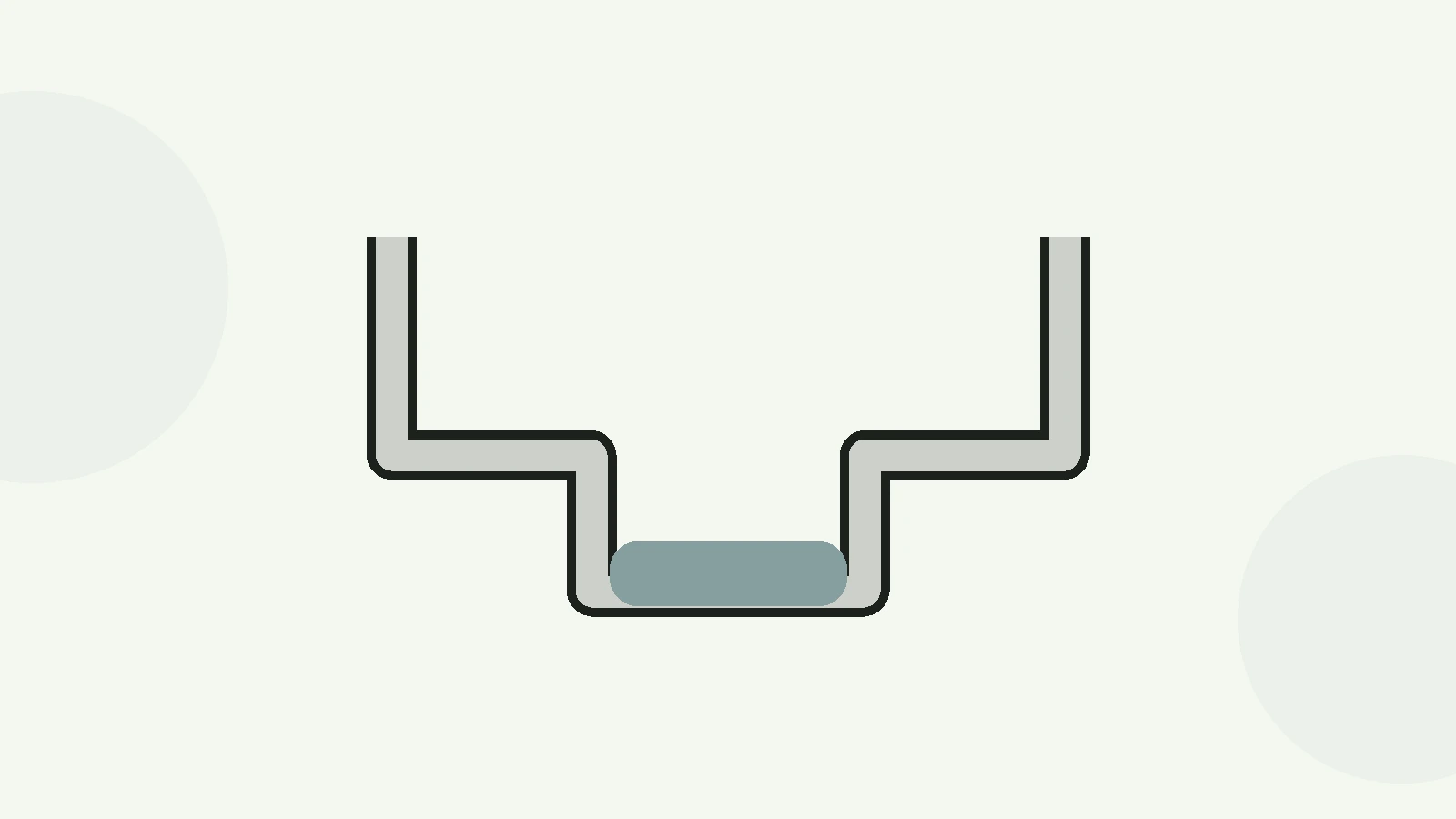
Under every drain in the house, the kitchen, the basin, the bath, the washing machine outlet and the lavatory, the pipe bends into an S or a P. Water sits permanently in the bend, and that water is the seal. It is typically a few centimetres deep.
What separates the inside of the house from the main sewer is not a wall or a valve. It is that water.
It does three jobs at once. It caps the gases forming in the sewer so they do not rise into the rooms. It physically blocks cockroaches, flies, drain flies and rodents from travelling up the pipe. And it stops sewer air accumulating indoors.
When the water goes, all three go together. The pipe becomes a continuous opening from the sewer into the house.
How long it takes
This is the question owners ask most, and the answer depends heavily on conditions.
| Conditions | Roughly how long |
|---|---|
| Summer, warm, air moving through | Smell can begin within days |
| An ordinary house in an average season | Weeks to a few months |
| Winter, cold, closed up | Longer, but it still goes eventually |
| A washing machine tray, or a bathroom nobody uses | Can already be dry in an occupied house |
Evaporation is not the only mechanism, which is why assuming a month is safe does not work.
- Siphoning. A large discharge elsewhere in the system changes the pressure in the pipes and pulls the seal out.
- Wicking. Lint or hair caught across the trap acts as a wick and draws the water out a little at a time.
- Poor venting. A blocked vent or a design fault puts the pipework under negative pressure and the seal is drawn away.
Any of these can empty a trap in well under a month.
The ones people forget
Kitchen and lavatory occur to everybody. What gets missed is the washing machine tray, an upstairs basin nobody uses, the bathroom floor gully, and the drainage chambers outside. Running water at one point does nothing about the one that is dry, and the smell will not stop until the right trap is refilled.
Smell is only the first stage
What makes this worth an article is not the smell. It is what an open pipe admits afterwards.
Stage one is odour. Sewer air fills the rooms and within days begins to be absorbed by wallpaper, carpet, cupboard interiors and timber. Caught here, running the taps and opening the windows resolves it.
Stage two is insects. An open drain is simply a corridor. The house has no people, no competition for food, some moisture and no predators, which is close to ideal conditions for breeding. At this point the problem changes character: running the taps removes the smell, but it does not remove a population that has established itself. That needs treating, and treating costs money.
Stage three is rodents. Some can use the same route, an empty house offers them other ways in as well, and once they nest in the ceiling void or under the floor, several things follow at once. Urine and droppings soak into ceiling and floor materials, producing a smell that cleaning does not remove and that ends in replacing the material. Cables get chewed, which is an electrical and fire risk. Insulation is destroyed. And neighbours complain, because smell crosses the boundary, at which point this stops being a problem inside your house.
Stage one costs nothing to fix. Stage three involves stripping out interior finishes. Same cause, different month.
Water restores the seal. It does not evict what came through while the seal was gone.
The lavatory is a separate case
When the water in a lavatory pan evaporates completely, two things happen in addition to the smell.
Mineral and urine deposits harden onto the ceramic and stop responding to ordinary cleaning. And the rubber components inside the cistern dry out, harden and degrade, which is a common source of leaks when the water is turned back on.
In cold regions there is a complication. Managing the seal and protecting against freezing pull in opposite directions, since draining down the system is exactly what you do to prevent frozen pipes. The right answer depends on where the property is, and the two approaches should not be mixed without local advice.
Preventing it is almost absurdly simple
| Measure | What it involves |
|---|---|
| Run every drain monthly | Thirty seconds to a minute at each outlet. The basic method and the most reliable |
| Evaporation retardant | A proprietary additive that forms a film on the surface and slows the loss |
| Seal the outlet | Film held with a band, or closing the plug. Crude, and it works |
| Ventilate while you are there | Open the windows during the same visit. Suppresses mould and lets you check the doors |
Fifteen minutes for a whole house. No tools, no qualification, no cost.
And if nobody is in Japan, those fifteen minutes do not happen. The problem for an overseas owner was never technical. It is whether there is a person who turns the taps once a month.
What else gets checked in the same visit
Running the water is the reason to be in the building. What makes the visit worth its cost is everything noticed while there.
- The movement of doors and windows, which reports distortion and settlement before anything else does
- Staining on ceilings and walls, where the gap between a leak starting and being found decides the cost
- Give underfoot, and changes in how the floor feels
- Condensation and mould, particularly in unlit rooms, behind furniture and under rugs
- Cracks in the exterior, dropped soffits, blocked gutters
- Vegetation crossing the boundary, and whether the block wall is still upright
- Accumulated post, which is the clearest external signal that nobody is home
Several of those connect to articles of their own: how water damage develops out of sight, and what an unattended building attracts.
What the timings here are worth
The periods given are general indications. How fast a seal is lost depends on temperature, humidity, the construction of the building, the design of the pipework and the condition of the fittings.
This is general information. Where treatment or repair is required, that is work for specialist contractors. En Beau lo does not carry out pest control or construction work and introduces qualified contractors where they are needed.
If you are buying something that has stood empty
On a property that has been vacant for a long period, this is not a risk to prevent. It has already happened.
What matters then is how far it went. How deeply the smell has been absorbed into the finishes, and whether insects or rodents established themselves and are still there. Neither question can be answered from photographs. Both belong on the list of things checked in person before an offer, alongside everything else in what you must verify yourself before buying.
Somebody turns the taps once a month
We visit monthly, run every drain, ventilate the building, and check the interior and exterior, then send a report with dated photographs. Where something needs attention, we explain it in your language and arrange the contractor.
Talk to us about property careSources and notes
Drain traps and the depth of water they hold are governed by plumbing standards for residential buildings. Loss of the seal through evaporation, induced siphoning, capillary action and inadequate venting are recognised mechanisms in plumbing practice. Timings given are general indications drawn from field experience and vary with conditions. Field observations are from work carried out by En Beau lo.